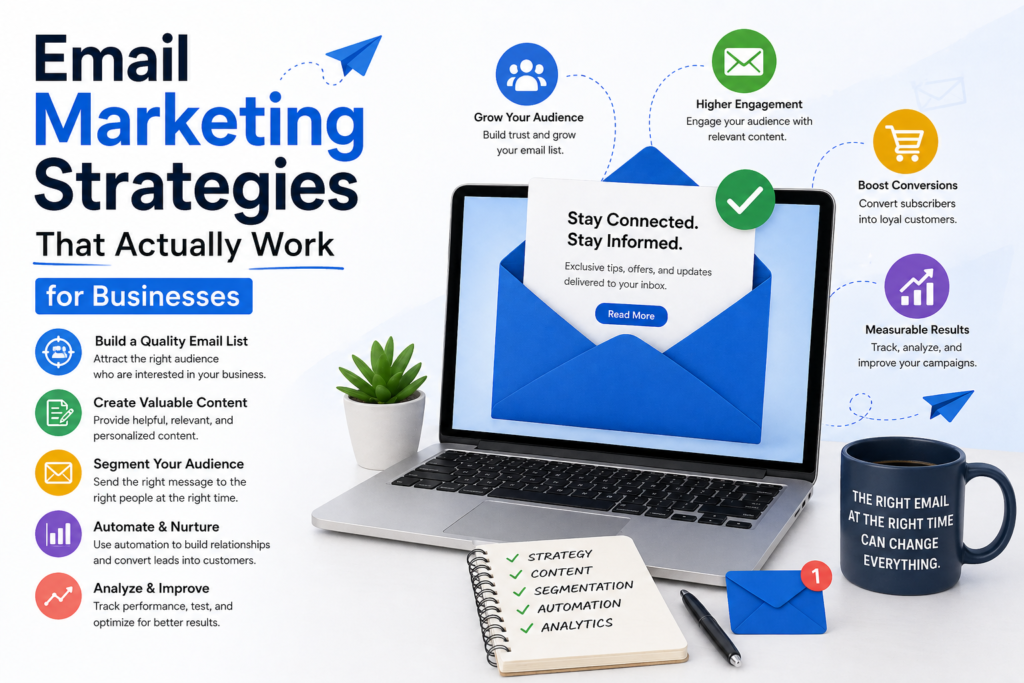
Email marketing continues to be one of the most effective digital marketing strategies, even in the age of social media. It allows businesses to communicate directly with their audience, build relationships, and drive conversions. To build practical digital marketing skills, visit Grow Digital Institute. When done correctly, email marketing can deliver a high return on investment and support long-term growth.
The foundation of successful email marketing is a quality email list. Businesses should focus on building their own list rather than buying one. Collecting emails through website forms, newsletters, and lead magnets ensures that subscribers are genuinely interested in your content or services. This leads to better engagement and results.
Creating valuable content is essential for email marketing success. Emails should not only promote products but also provide useful information. Sharing tips, insights, updates, and offers keeps subscribers engaged and interested. A balance between promotional and informative content is important to maintain trust.
Personalization is a powerful strategy in email marketing. Addressing subscribers by their name and sending relevant content based on their interests can significantly improve open rates and engagement. People are more likely to respond to emails that feel personal and tailored to their needs.
Another important aspect is timing and frequency. Sending too many emails can annoy subscribers, while sending too few may reduce engagement. Finding the right balance is key. Testing different schedules and analyzing results can help determine the best timing for your audience.
Subject lines play a crucial role in email marketing. A strong subject line grabs attention and encourages users to open the email. It should be clear, engaging, and relevant to the content inside. Avoid using misleading or spammy language, as it can reduce trust.
Design and layout also impact email performance. Emails should be visually appealing, easy to read, and mobile-friendly. Using simple designs, clear headings, and strong calls-to-action improves user experience and increases conversions. If you want hands-on training with live projects, explore the Digital Marketing Courses in Borivali.
Automation is another powerful feature of email marketing. Automated emails such as welcome messages, follow-ups, and reminders save time and ensure consistent communication. For example, a welcome email series can introduce new subscribers to your brand and services.
Tracking and analysis are important for improving email campaigns. Metrics like open rates, click-through rates, and conversions provide insights into performance. By analyzing this data, businesses can make improvements and achieve better results over time.
Email marketing is not just about selling—it is about building relationships. When businesses provide value and maintain consistent communication, they create trust and loyalty among customers. This leads to repeat business and long-term success.